Mid Term
User Manual and Maintenance Manual
Author: Hardik Bharatkumar Gala
Class code: IE673 live
Date: December 2, 2011
eLearning Pack ID : IE 673-Fall 2011-60-35
Statement: All contents of this assignment were submitted by Hardik Gala
Maruti-Suzuki Swift
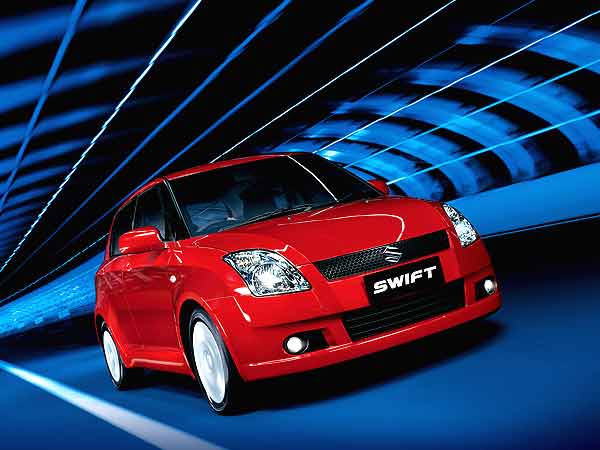
Maruti-Suzuki Swift
User manual
A new kind of a compact car.
A new departure in Suzuki design.
The swift is more eye catching, fuel efficient, refined, spacious and price competitive than any other compact car in the segment.
Contents:
1) Specifications
a) Body type
b) Engine
c) Transmission
d) Dimensions
e) Chassis
f) Tires
g) Max-speed
h) Fuel tank capacity
2) Features
a) Anti-lock breaking system
b) Electronic brake force distribution
c) Superior Dual SRS airbags
d) Controlled area network bus (CANBUS)
e) Automatic climate control
f) ALTEC 32
g) Chassis
h) Fuel efficiency
i) Rally based suspension system
j) Dynamic styling
k) Extensive noise suppressing measures
l) Exterior built
m) Self park
n) Rain-Sensing Wipers
o) Remote keyless entry
p) Telescoping steering wheel/adjustable pedals
1. Specifications
a) Body type
Body type: Hatch back
Number of doors: 5
Seating capacity: 5
b) Engine
Capacity: 1298 cc
Number of cylinders: 4
Number of valves: 16
Compression ratio: 9:1
Maximum power: 87 bhp@ 6000 rpm
Maximum torque: 113 Nm@ 4500 rpm
Fuel distribution: Multipoint injection
c) Transmission
Type: Five speed manual
Gear ratio: 1st -3.545
2nd -1.904
3rd -1.28
4th -0.966
5th -0.757
Reverse- 3.272
d) Dimensions
Length: 3695mm
Width: 1690mm
Height: 1530mm
Wheelbase: 2390mm
Ground clearance: 170mm
Minimum turning radius: 4.7 meters
Luggage capacity: 232 liters
e) Chassis
Steering: Rack and pinion, power assisted
Brakes: Front- ventilated discs
Back- drum
Suspension: Front- MacPherson strut and coil spring
Back- torsion beam and coil spring
f) Tires: 165/80 R14 185/70 R14
g) Maximum speed: 120 mph
h) Fuel tank capacity: 43 liters
2. Features
a) Anti-lock breaking system:

An anti-lock braking system is a safety system that allows the wheels on a motor vehicle to continue interacting tractively with the road surface as directed by driver steering inputs while braking, preventing the wheels from locking up (that is, ceasing rotation) and therefore avoiding skidding.
An ABS generally offers improved vehicle control and decreases stopping distances on dry and slippery surfaces for many drivers; however, on loose surfaces like gravel or snow-covered pavement, an ABS can significantly increase braking distance, although still improving vehicle control.
b) Electronic brake force distribution:
Electronic brake force distribution is an automobile brake technology that automatically varies the amount of force applied to each of a vehicle's brakes, based on road conditions, speed, loading, etc. Always coupled with anti-lock braking systems, EBD can apply more or less braking pressure to each wheel in order to maximize stopping power whilst maintaining vehicular control. Typically, the front end carries the most weight and EBD distributes less braking pressure to the rear brakes so the rear brakes do not lock up and cause a skid. In some systems, EBD distributes more braking pressure at the rear brakes during initial brake application before the effects of weight transfer become apparent.
c) Superior Dual SRS airbags:
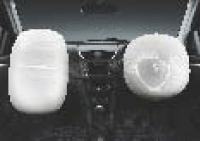
It is an occupant restraint consisting of a flexible envelope designed to inflate rapidly during an automobile collision, to prevent occupants from striking interior objects such as the steering wheel or a window. Swift has 4 air bags- One for the driver, one for the passenger in the front and two air bags in the rear for the passengers.
d) Controlled area network bus (CANBUS):
Just like an office Local Area Network (LAN) the swift has a Controlled Area Network Bus to enable data transfer between the car’s microprocessors and components. 6 microprocessors connected in a high speed CANBUS controls, engine, ABS_EBD, Auto AC, security and deadlock and airbag.
e) Automatic climate control:
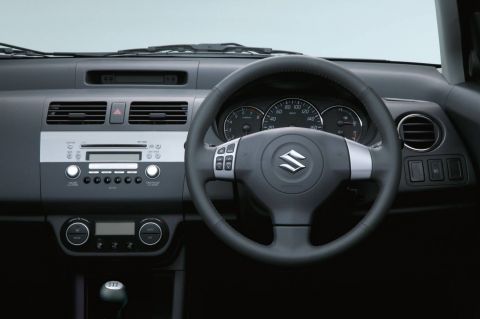
Automatic climate control handles the met department without the passenger even intervening. The passenger gets constant temperature with which it is always comfortable. A very efficient and large radiator coupled with a high performance electric fan and motor results in and ultra-quick chilling air-conditioning system.
f) ALTEC 32:
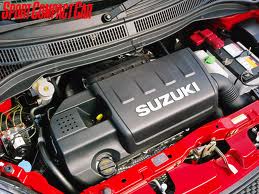
Swift has an all-aluminum 16 value 32 bit hyper-tech engine. The engine is configured to handle low and mid-range speeds, ideal for stop and go city driving. All new exhaust system arrangement helps to ensure quick catalyzed warm up and thus minimizes emission of harmful substances.
g) Chassis:
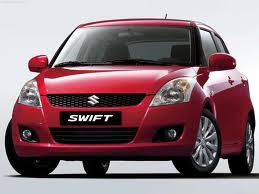
The chassis engineers have targeted a dynamic driving experience together with a ride that feels sophisticated and comfortable. Swift body has a newly developed platform incorporating specially conceived chassis systems. The newly developed platform provides the Swift with wide treads (front: 1470mm, rear: 1480mm), a great overall width (1690mm) and a long wheel base (2380mm). These dimensions not only benefit interior spaciousness but also help to enable superior on road stability and comfort.
h) Fuel efficiency:
The swift has a very fuel efficient engine. The gear ratio is set up in such a way that it utilizes minimum fuel. Thus it contributes to greener environment by burning less fossil fuels preventing air pollution.
i) Rally based suspension system:
The MacPherson strut in front attaches the suspension lower arms, steering, gearbox and rear engine mounting to a suspension frame, not the body, raising handling and comfort to a new high.
j) Dynamic styling:
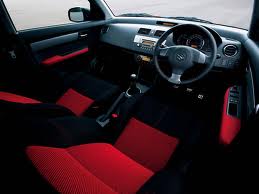
Swift is a muscular and stylish car. It has an aerodynamic front air dam with the airflow smoothing the door mirrors. It has a strong underbody structure and class defining body rigidity. An updated short stroke design with enhances shift linkages gives a firm quick shift feel in the car.
k) Extensive noise suppressing measures:
Swift has a dash inner silencer which absorbs and blocks engine noise and dash outer silencer which absorbs and blocks transmitted engine noise. It has crankshaft damper pulley which minimizes engine torsional vibrations. It also has a double sealing weather strip which reduces wind noise.
l) Exterior built:
The exteriors of the swift are made up to high tensile steel and tailored banks to ensure lightness and strength. The structure is crash resistant. The lightness of the structure helps in reducing the car weight thus increasing the performance and efficiency of the car.
m) Self-Park:
line up the superimposed square in the backup camera with your intended parking spot, gently let off the brakes and the swift will slowly steer around adjacent cars as it backs into the spot. You have to press the brakes to bring the car to a stop at the end.
n) Rain-Sensing Wipers:
They generally use infrared sensors to monitor a certain section of the windshield for moisture or dirt, then trigger the wipers to respond according to a threshold the driver sets.
o) Remote keyless entry:
Keyless entry systems allow you to unlock your car by pushing a button on a remote. The ability to quickly get into your car without fumbling for the key is an important safety feature, especially in poorly-lit areas. With most remotes, pushing the button once unlocks just the driver's door; you must push twice to unlock other doors, so there's no worry about a hidden intruder jumping into the passenger's side. Most also have a panic button that honks the horn and flashes the lights.
p) Telescoping steering wheel/adjustable pedals:
Most new cars have height-adjustable (tilt) steering columns; some cars have steering wheels that telescope (move in and out) and/or electrically adjustable pedals. The latter two not only make finding a comfortable position easier, but they allow shorter drivers to safely position themselves farther from the airbag while still keeping their feet comfortably on the pedals.
Maintenance manual
Contents
1. General maintenance tips
· Engine oil change
· Fluid level
· Tire pressure
· Regular servicing
· Drive cautiously
2. Regular maintenance
· Monthly
· Three to six months
· annually
3. Inspection and maintenance
· Engine oil check
· Refilling
· Coolant check
· Brake fluid check
1. General maintenance tips:
· Engine Oil Change – Engine Oil Change is one of the most essential points to remember while maintaining your Maruti Suzuki Swift . We are all aware that engine oil keeps the engine components of the vehicle well lubricated and friction free so that your car renders better mileage and operates in a flawless manner. After prolonged use engine oil gets deteriorated and loses its lubrication power and thus it becomes all the more important to change it. Basically the metal particles and dust make the oil grime and therefore changing the same as per schedule can really enhance the life of your engine.
· Fluid Level – For Maruti Suzuki Swift maintenance, it is essential to take care of all the fluids present in the vehicle for better performance of different components of Maruti Suzuki Swift. Various fluids include Transmission fluid, Coolant Fluid, brake fluid and battery fluid and they need to be maintained and checked monthly or as per scheduled.
· Tyre Pressure – Another very important point to keep in mind for your Swift maintenance. Keeping a thorough check on the tyre pressure is required so that the wheels don’t wear out too soon. Fact is that low pressure always leads to great trouble and increase fuel consumption by up to 10%. Also make sure that the tyres are not too much inflated because that results in bumpy driving.
· Regular Servicing – While taking care of your Maruti Suzuki Swift maintenance, it is extremely important to take your car for servicing as per schedule mentioned in the company’s guidelines. Always service your vehicle at authorized service station and thereafter remember to take the test drive to cross check all the faults mentioned before dropping for servicing.
· Drive cautiously – Make sure you never start your Maruti Suzuki Swift in a jackrabbit manner; this in turn puts strain on engine and brakes driving. A bad driving habit also leads to early wear out of essential car components. Avoid keeping your leg on accelerator when not in use also try and use right speed-gear combination while driving.
2. Regularly maintaining your precious car according to schedule is quite essential in order to keep it moving without any deadlocks. Following the owner’s manual guidelines or manufacturer’s recommendations is always good for the life of your vehicle. So below mentioned are basic and accurate maintenance schedule for the car you own.
· At Least Monthly
Examining the tire pressure at least once a month is important. Keep an eye on any of the wear and tear in the tires and better don’t ignore them. At the same time interval do check the coolant level, windshield wiper fluid and motor oil levels as well by opening the hood, take the help of owner’s manual in locating the place for each. Finally the lights, the turn signals and the brake lights need to be examined too once in a month.
· Every Three to Six Months
The oil needs to be changed every three to six months because it degrades with time and renders poor mileage so keeping the track of it for better mileage is necessary. Also check the battery as well and ensure that it is properly mounted. In case if you don’t use your vehicle very often you can perform the same every 8000 km.
· Annually
The car’s air filter needs to be cleaned or changed once in a year or every 24,000 km as it is an essential part of the system that keeps the dirt away, also check the serpentine belt to ensure it is free of breaks and placed perfectly. The brake system of your car requires thorough checkup annually, so better remove the tires and inspect the brakes properly. Annual car maintenance is must but keep in mind that all cars are not same and their maintenance varies according to their technicality. But following a car maintenance schedule is advised by each and every manufacturer, therefore follow it timely.
3. Inspection and maintenance:
· Engine oil check: It is important to keep the engine oil at the correct level for proper lubrication of your vehicle’s engine. Check the oil level with the vehicle on a level surface. The oil level indication may be inaccurate if the vehicle is on a slope. The oil level should be checked either before starting the engine or at least five minutes after stopping the engine. Pull out the oil dipstick, wipe oil off with a clean cloth, insert the dipstick all the way into the engine, and then remove it again. The oil on the stick should be between the upper and lower limits shown on the stick. If the oil level indication is near the lower limit, add enough oil to raise the level to the upper limit.
· Refilling: Remove the oil filler cap and pour oil slowly through the filler hole to bring the oil level to the upper limit on the dipstick. Be careful not to overfill. Too much oil is almost as bad as too little oil. After refilling, start the engine and allow it to idle for about a minute. Stop the engine, wait for five minutes and check the oil level again.
· Engine coolant: Check the coolant level at the reservoir tank, not at the radiator. With the engine cool, the coolant level should be between the “FULL” and “LOW” marks. If the Coolant level is below the “LOW” mark, more coolant should be added. Remove the reservoir tank cap and add coolant until the reservoir tank level reaches the “FULL” mark. Never fill the reservoir tank above the “FULL” mark.
· Brake Fluid: Check the brake fluid level by looking at the reservoir in the engine compartment. Check that the fluid level is between the “MAX” and “MIN” lines. If the brake fluid level is near the “MIN” line, fill it up to the “MAX” line with brake fluid.
